The pumpkin spice season marks the onset of colder temperatures and fewer sunny days, prompting questions about the effectiveness of solar panels in harsh winter weather. In this article, we address common concerns and provide insights into how solar panels perform during the winter months.
1. Solar Panels in Winter:
Solar panels indeed function well in cold weather, as solar energy is derived entirely from the sun. Contrary to the misconception that they only thrive in warm conditions, studies conducted by the U.S. Department of Energy Regional Test Centers confirm their efficacy even in low temperatures.
Researchers at the National Renewable Energy Laboratory (NREL) subject solar panels to various weather conditions, including cold temperatures. The testing procedures involve applying intense UV intensity in a controlled environment and up to 1,000 suns in an uncontrolled environment.
2. Winter Efficiency Boost:
Winter emerges as an optimal time for solar panel use. Photovoltaic cell solar panels are designed to generate electricity when photons from the sun’s rays strike the cells, setting electrons in motion. In cold temperatures, electrons are at a low energy level, but sunlight elevates them to a high-energy state, enhancing energy production.
It’s important to note that the efficiency of solar energy systems begins to decline around 77 degrees, making winter an advantageous season for maximizing energy output due to lower temperatures and longer daylight hours.
3. Snowfall and Solar Panels:
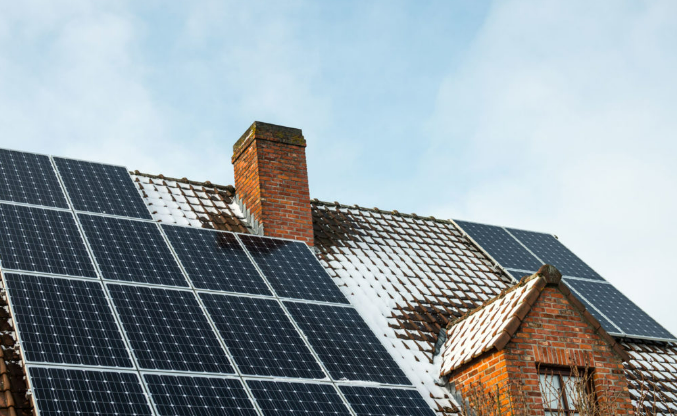
Even with a thin layer of snow, solar panels can still produce power. However, heavy snowfall may disrupt the production of a solar power system. The panels will resume normal function once the snow has melted or slid off.
Considerations for those concerned about thick snow layers on solar panels include the fact that most panels are mounted on sloped roofs. Gravity naturally removes snow from panels as it melts. Climbing onto the roof to manually remove snow is discouraged for safety reasons.
4. Snow Damage and Solar Panels:
In most cases, snowfall is unlikely to damage solar panels. Rigorous pressure tests are conducted on panels during production, and they are rated based on their ability to withstand specific pressures. Higher quality panels, such as those used by Efficient Home Services have higher pressure ratings, ensuring durability under various conditions.
Conclusion:
In conclusion, solar panels are not only effective but can thrive in cold weather, making winter an opportune time for maximizing energy production. Understanding the impact of snowfall and the built-in durability of solar panels can help users make informed decisions about their usage and maintenance during the winter months.
This post was written by a professional at EHS. Efficient Home Services of St. Petersburg FL is a solar energy company offering a variety of services. At Efficient Home Services of Florida, our mission is to save you money on your solar panel inspection Tampa FL. No other home energy company serving Florida offers the range of cost-saving solutions that we do. Whereas other businesses might focus on one component of a home’s energy use, such as solar panel installation or HVAC unit installation, EHS provides services across the spectrum to address every aspect of your home’s energy inefficiencies. We are a team of knowledgeable professionals who banded together to give homeowners what other companies promised but could not deliver – real relief from high electric bills.